Navigating European Contemporary Exhibitions
Exhibitions are carefully organized presentations of artworks. They give you a structured way to experience ideas, history, and new visual experiments.
Common Types of Exhibitions Explained
When you read museum programmes or art magazines, you will encounter several specific exhibition formats. Understanding these terms helps you choose what to see.
Solo Exhibitions
A solo show is dedicated entirely to the work of one artist. It allows you to study that creator’s unique visual style, recurring motifs, and working methods in great depth.
Retrospectives
A retrospective looks back across an artist’s whole lifetime or career. Works are often displayed in chronological order so you can see how the artist evolved from early experiments to late mastery.
Thematic Group Shows
A curator selects artworks by twenty or thirty different artists around a single central question, such as artificial intelligence, human migration, or sustainable architecture.
What to Expect When Visiting a Contemporary Exhibition
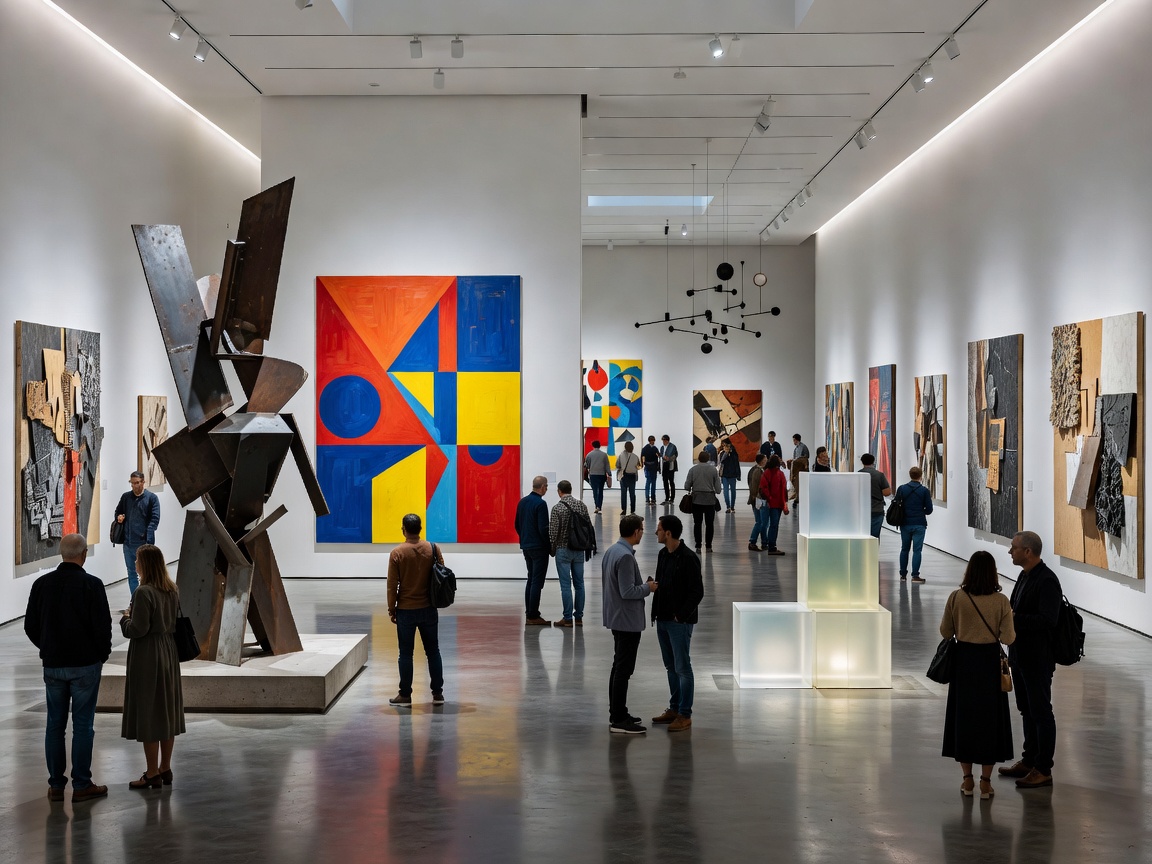
Walking into a contemporary exhibition for the first time can feel surprising. You might see a pile of discarded electronics, a darkened room with three projection screens, or a single neon tube on a bare concrete wall.
Do not feel pressured to understand everything immediately. Contemporary art is designed to spark thoughts, questions, and curiosity rather than convey an obvious answer.
Read the wall label (often called the exhibition label). It will state the artist's name, birth year, artwork title, creation year, and materials used. Many labels include a short paragraph explaining the curator's perspective.
Give each room time. Spend at least two minutes with an artwork before deciding how you feel about it. Observe how the lighting, room dimensions, and neighbouring artworks interact.
Essential Exhibition Terminology
A quick reference glossary for common art world terms encountered across Europe.